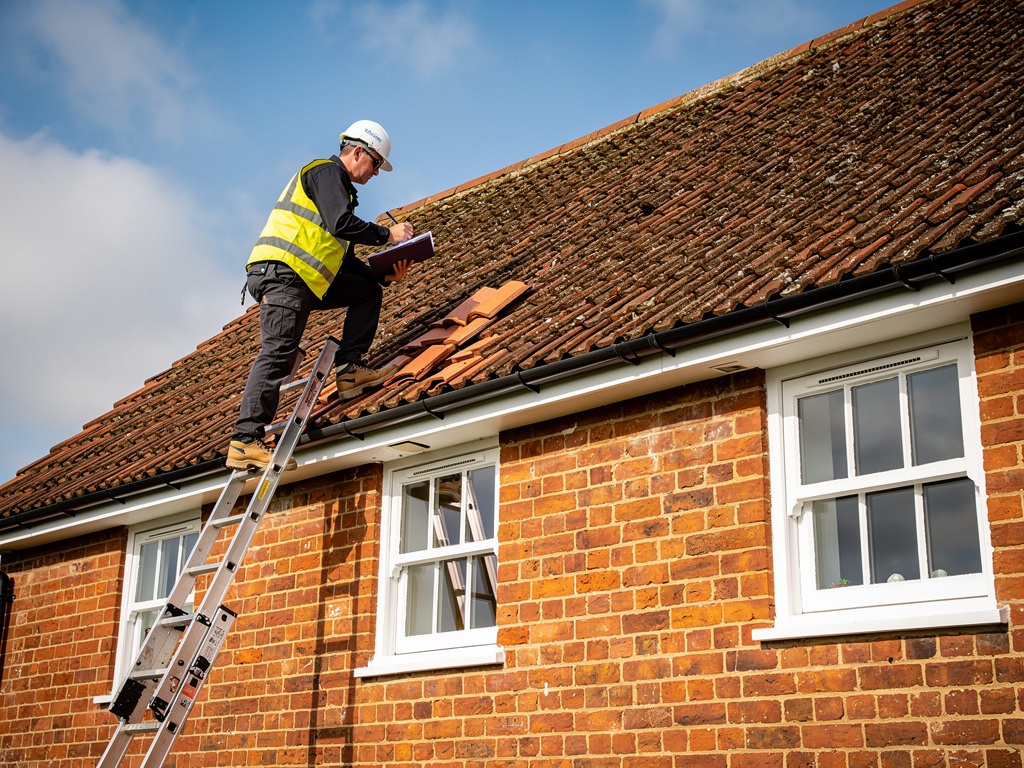
The roof is arguably the most important element of any building. It is the first line of defence against the weather — and when it fails, the consequences can be severe and expensive. Yet many buyers underestimate just how much a surveyor scrutinises a roof during a building survey inspection.
At Crowborough Surveyors, our chartered surveyors carry out thorough roof assessments on every property we inspect across East Sussex and the surrounding area. Here is a detailed guide to what we look for — and why it matters.
External Roof Inspection
The external inspection begins from ground level using binoculars and, where safe and accessible, from the roof itself. Our surveyors assess:
Roof Covering
The most visible element — whether the property has clay plain tiles, concrete interlocking tiles, natural slate, artificial slate, flat felt, EPDM rubber, lead or any other covering. We look for:
- Slipped, cracked, broken or missing tiles or slates
- Moss, lichen and algae growth — which can lift tiles and trap moisture
- Signs of previous patch repairs using mismatched materials
- General condition and estimated remaining lifespan of the covering
- Delamination or blistering on flat roof surfaces
- Ponding water on flat roofs — indicating inadequate falls
Ridge and Hip Tiles
Ridge tiles at the apex of a pitched roof and hip tiles on the sloping edges are bedded in mortar and are a frequent failure point. We check for cracked, loose or missing ridge tiles, and failed mortar pointing which allows water ingress.
Flashings
Lead, zinc or code-flashing where the roof meets walls, chimney stacks, dormers or rooflights is critical. Failed flashings are one of the most common causes of roof leaks. We check that flashings are properly dressed, well-secured into mortar joints, and free from splits or lifting.
Chimney Stacks
Chimney stacks are exposed to the elements on all sides and frequently deteriorate. We assess the brickwork for spalling, cracked or open mortar joints (repointing required), condition of the chimney pots and caps, flaunching (the mortar fillet at the base of the pots), and lead soakers and flashings at the base of the stack.
Gutters and Rainwater Goods
Gutters, downpipes and hoppers are inspected for blockages, leaks, sagging, missing sections, and evidence of overflowing which can saturate walls and cause damp internally. Cast iron rainwater goods, common in Victorian and Edwardian properties, are prone to rust and joint failure.
Internal Roof Space Inspection
Where safe and accessible, our surveyors enter the roof space (loft) to carry out an inspection from the inside. This often reveals defects that are invisible from the exterior.
Roof Structure
The roof structure — whether traditional cut timber rafter construction or modern trussed rafter — is inspected for:
- Deflection or sagging of rafters and purlins
- Split, notched or cut structural timbers (often caused by unauthorised alterations)
- Evidence of previous or current roof spread — where the roof pushes outward on the walls
- Inadequate or missing bracing in trussed rafter roofs
- Evidence of previous structural repairs
Timber Condition
Roof timbers are particularly susceptible to wet rot, dry rot and woodworm (beetle infestation). We check for soft or spongy timber, fruiting bodies of dry rot fungus, exit holes from wood-boring beetles, and evidence of previous treatment.
Insulation
We note the type, depth and condition of roof insulation. Current building regulations recommend a minimum 270mm of mineral wool between and over joists. Inadequate insulation affects energy performance (EPC rating) and can lead to condensation issues.
Evidence of Water Ingress
Staining, damp patches, salt deposits and daylight visible through the roof covering are all signs of water penetration. We document the location and apparent severity of any ingress found.
What Happens If Defects Are Found?
Our Level 3 Building Survey report will categorise roof defects using the RICS traffic light system:
- Condition Rating 3 (Red) — Defects that are serious and/or need to be repaired, replaced or investigated urgently
- Condition Rating 2 (Amber) — Defects that need repairing or replacing but are not considered serious or urgent
- Condition Rating 1 (Green) — No repair is currently needed; the property must be maintained in the normal way
For significant defects, we will advise on appropriate specialist investigations (e.g., a specialist roofing contractor's report or structural engineer's assessment) before exchange of contracts.
How Much Does a Roof Repair Cost?
Costs vary enormously depending on the extent of work required:
- Repointing ridge tiles: £500–£1,500
- Replacing lead flashings to a chimney: £800–£2,500
- Full re-roofing of a 3-bed semi-detached: £6,000–£14,000
- Flat roof replacement (small extension): £1,500–£4,000
- Structural repairs to roof timbers: £2,000–£15,000+
Identifying these costs before purchase allows buyers to negotiate accordingly or budget realistically for post-purchase works.