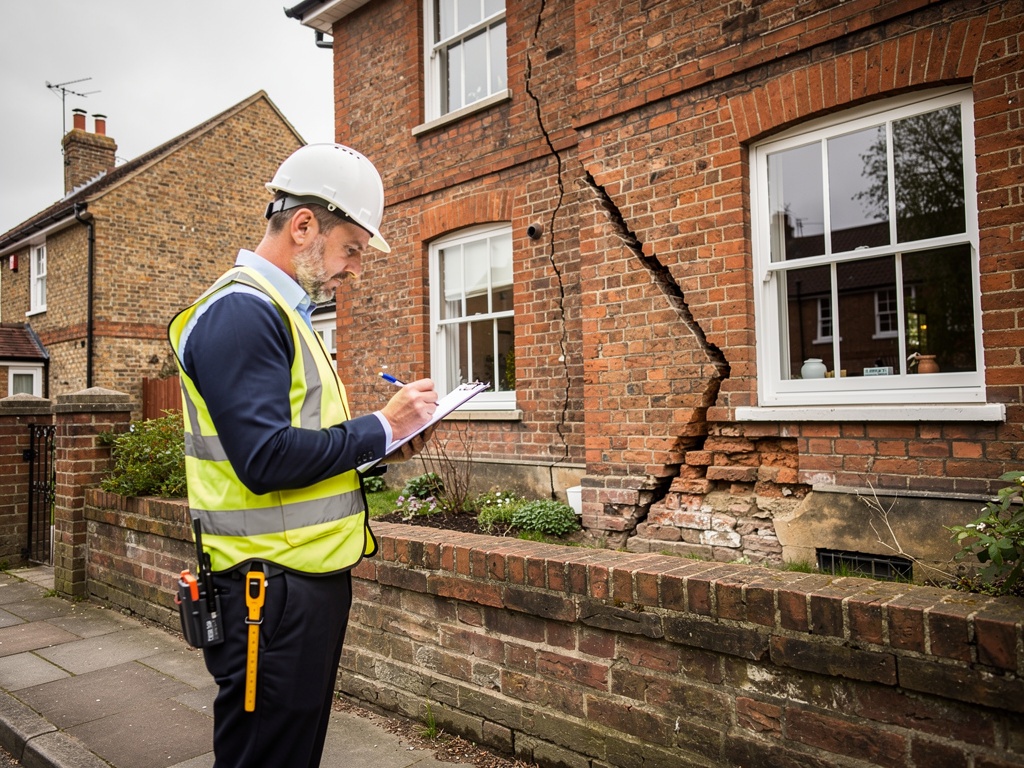
The word "subsidence" can cause panic among homeowners and buyers alike. But while subsidence is a serious structural issue that should never be ignored, it is also frequently misunderstood. Not every crack is subsidence — and even genuine subsidence can often be managed, repaired and insured without catastrophic consequences.
At Crowborough Surveyors, our chartered building surveyors assess hundreds of properties with potential movement issues every year. Here is what you need to know.
What Is Subsidence?
Subsidence occurs when the ground beneath a property's foundations moves downwards, causing the building to sink or settle unevenly. This movement can crack walls, distort door and window frames, and in severe cases compromise the structural integrity of the building.
It is important to distinguish subsidence from:
- Settlement — gradual downward movement that occurs as a building compresses the soil beneath it over time. This is normal and usually historic.
- Heave — upward movement of the ground, typically caused by tree removal or clay soil swelling when rehydrated
- Thermal movement — expansion and contraction of materials due to temperature changes
Warning Signs of Subsidence
Key indicators that may suggest subsidence include:
- Diagonal cracks wider than 3mm, typically appearing at the corners of windows and doors
- Cracks that are wider at the top than the bottom
- Doors and windows that suddenly stick or jam
- Visible gaps between walls, floors and ceilings
- Sloping or uneven floors
- Wallpaper creasing or rippling at the junction of walls and ceilings
However — and this is important — most cracks in homes are NOT subsidence. Hairline cracks and cracks below 1mm are usually the result of normal thermal and moisture movement and require no structural concern.
Causes of Subsidence in East Sussex
East Sussex sits predominantly on clay soils, which are particularly susceptible to volume changes with moisture content. The main causes of subsidence in our area include:
Tree Roots
Trees — particularly willows, poplars and oaks — can extract enormous quantities of moisture from clay soil in summer, causing shrinkage and subsidence. If a tree is closer to the house than its mature height, it warrants investigation. Conversely, tree removal on clay soils can cause heave as the clay rehydrates.
Leaking Drains
A cracked or leaking drain beneath or adjacent to a building can wash away fine particles from the soil, creating voids. We recommend a CCTV drain survey for any property showing signs of movement.
Clay Soil Shrinkage
Extended dry summers cause clay soils to shrink dramatically. The dry summers of 2018, 2019 and 2022 generated a surge in subsidence claims across East Sussex and Kent.
Shallow Foundations
Victorian and Edwardian properties typically have shallow foundations that are more vulnerable to soil movement than modern deep strip or pile foundations.
What Happens After a Subsidence Survey?
If our survey identifies subsidence, we will recommend a monitoring programme to establish whether movement is ongoing or historic. Historic, stable movement is far less concerning than active, progressive subsidence. Our report will include guidance on the likely cause, the extent of damage, recommended remediation and insurance implications.
Subsidence and Insurance
Buildings insurance covers subsidence claims but premiums can increase significantly after a claim. When buying a property with a history of subsidence, ensure you obtain full documentation of past remediation works and that your solicitor investigates the insurance history thoroughly.