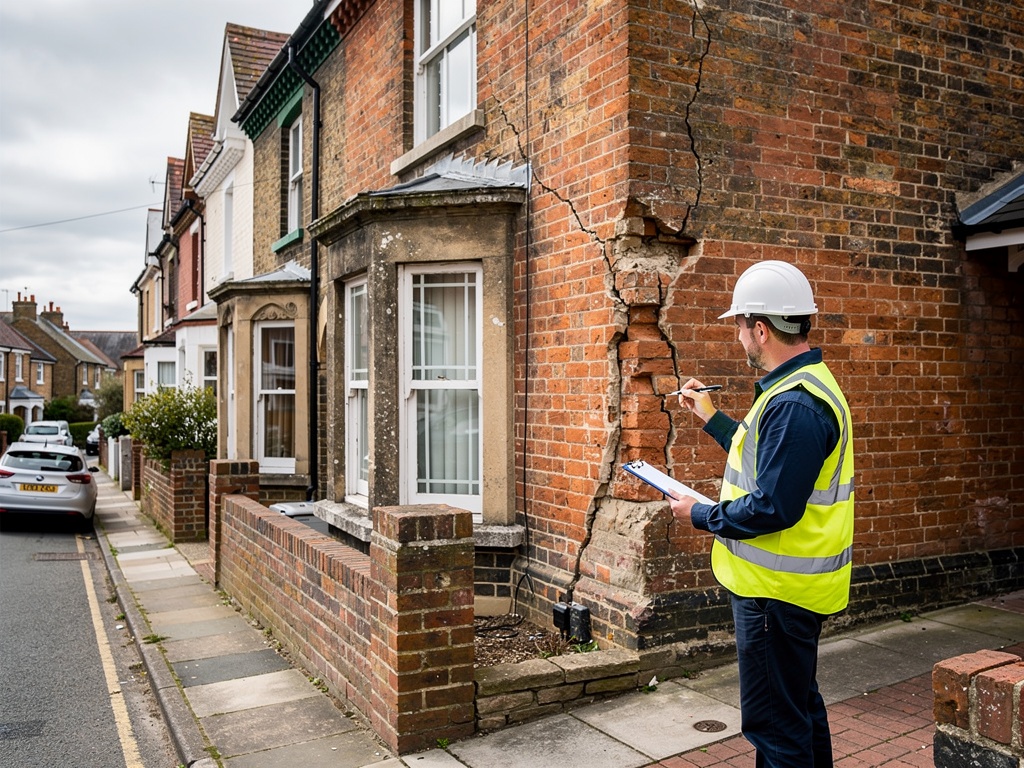
East Sussex is home to thousands of beautiful Victorian and Edwardian properties. From the terraced streets of Crowborough to the grand detached villas of Tunbridge Wells, these period homes are beloved for their character, generous proportions and craftsmanship. But they come with a unique set of challenges that modern buyers must understand before committing to a purchase.
At Crowborough Surveyors, we carry out hundreds of Level 3 Building Surveys on period properties every year. This guide shares the most important things you need to know.
Why Period Properties Need Extra Scrutiny
Victorian homes were built between 1837 and 1901. Edwardian homes followed from 1901 to 1910. Both eras produced homes of lasting quality — but also with materials, techniques and standards very different from modern construction. Many have been extended, altered and repaired multiple times over their 100–150 year lives. Every change is a potential source of defects.
The Most Common Issues We Find
1. Damp — Rising, Penetrating and Condensation
Period properties were built without damp-proof courses or cavity walls. Many rely on solid brick walls that breathe naturally. Modern remediation attempts — such as cement renders or impermeable paints — can trap moisture and cause serious damage. Our surveyors use moisture meters and thermal imaging cameras to identify every type of damp and its source.
2. Structural Movement and Subsidence
Victorian foundations are typically shallow compared to modern standards. Tree roots, clay soil shrinkage and ageing drainage can all cause movement. We look carefully at cracks — their width, depth, pattern and location — to assess whether movement is historic or ongoing.
3. Roof Structure and Coverings
Many period roofs were built with slate tiles, which can last over 100 years if maintained. However, sarking felt beneath the tiles is often absent or degraded. We inspect loft spaces carefully and use binoculars on roof slopes to assess the condition of tiles, ridges, hips and flashings.
4. Chimney Stacks
Victorian homes often have multiple chimney stacks. These are frequently in poor condition — with failed pointing, cracked pots and corroded lead flashings. Unused chimneys must be ventilated to prevent damp and sulfate attack on the brickwork.
5. Timber Defects — Dry Rot and Wet Rot
Original timber floors, joists, window frames and door frames in period properties are susceptible to both dry rot and wet rot. Dry rot in particular can spread rapidly through masonry and requires urgent treatment. We probe suspect timber wherever accessible and look for telltale signs: cracking, discolouration and fungal growth.
6. Plumbing and Drainage
Original lead pipework is common in pre-1970 properties. Victorian drainage systems used clay pipes, which can fracture and become blocked. We recommend CCTV drain surveys for any period property purchase — especially in East Sussex where clay soils can cause pipe movement.
7. Electrical Wiring
Older electrical installations — including rubber-insulated wiring and fuse boxes with rewirable fuses — are a safety hazard. We flag outdated systems and recommend an Electrical Installation Condition Report (EICR) from a qualified electrician.
What Type of Survey Do You Need?
For any Victorian or Edwardian property, we strongly recommend a RICS Level 3 Building Survey (formerly the Full Building Survey). This is the most comprehensive inspection available and is essential for:
- Properties built before 1900
- Homes in anything other than good condition
- Properties that have been significantly altered or extended
- Listed buildings or properties in conservation areas
- Any property where you intend to carry out major renovation work
A Level 2 Home Survey may be suitable for a well-maintained, conventionally constructed Edwardian property in good condition — but always ask your surveyor first.
What About Listed Buildings?
East Sussex has a large number of listed buildings. If the property you are buying is listed, you will need Listed Building Consent for almost any alteration — including repairs that change the character of the building. Our surveyors have extensive experience with listed properties and can advise on consents and appropriate repair methods.
Budgeting for Repairs
A Level 3 survey on a Victorian property often identifies several defects. This should not be a reason to walk away — it is simply the reality of buying an older home. The key is to understand which defects are serious, which are routine maintenance, and to use the survey report to negotiate the purchase price accordingly.
Our survey reports include cost guidance for all significant defects, which helps buyers make informed decisions and approach vendors with confidence.
Our Coverage in East Sussex
We survey period properties throughout Crowborough, Tunbridge Wells, Uckfield, Heathfield and the wider East Sussex area. Our chartered surveyors have deep local knowledge of the construction types, soils and common issues found in this part of the South East.