Whether you're buying commercial premises outright or taking on a lease, the condition of the building matters enormously — and yet commercial property surveys are often overlooked by business owners focused on their business case rather than the bricks and mortar. In this guide, I'll explain why a commercial building survey is essential, what it covers, the different types available, and how it can protect your business investment in East Sussex and Kent.
Why Commercial Building Surveys Are Often Overlooked
Commercial property transactions move quickly, and business owners are understandably focused on getting the deal done. Surveys are sometimes seen as an unnecessary cost or a potential deal-breaker. But this short-term thinking can be very expensive. Commercial buildings, particularly older ones across East Sussex and Kent, can harbour significant structural issues, latent defects and costly maintenance liabilities that don't appear in the marketing particulars.
A pre-purchase or pre-lease survey from an experienced chartered building surveyor gives you independent evidence of the building's condition before you commit — and that information gives you real negotiating power. In our experience, the cost of a commercial survey is almost always recovered many times over through price reductions, repair obligations placed on vendors, or better-informed lease negotiations.
Pre-Purchase Commercial Building Survey
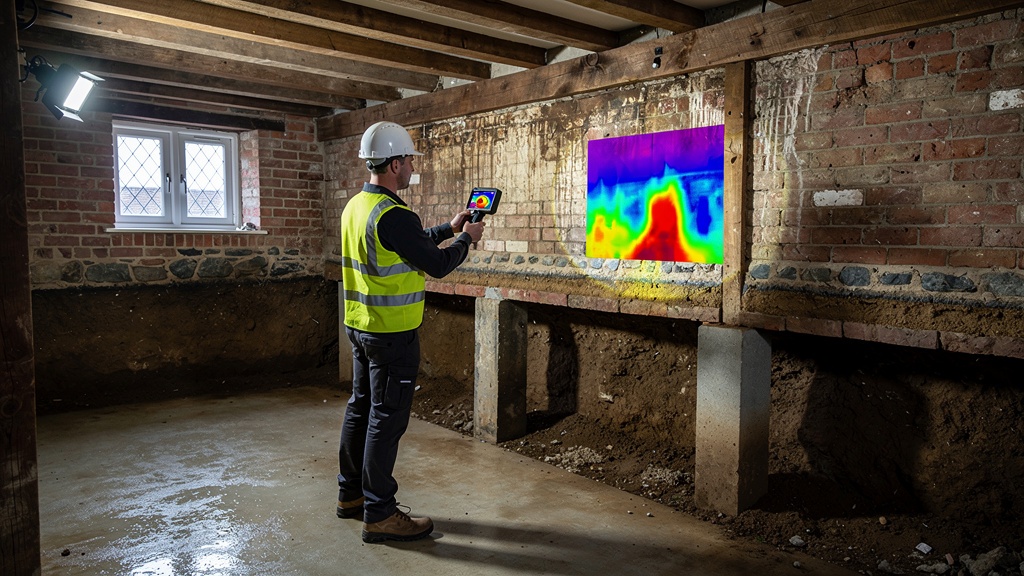
If you're buying a commercial building — whether an office, retail unit, warehouse, industrial unit, or mixed-use property — a pre-purchase building survey is a detailed inspection of the structure and fabric of the building. A thorough commercial survey covers:
- Structural integrity — foundations, load-bearing walls, roof structure, floor structures and any signs of movement or instability
- External fabric — cladding, masonry, coping stones, drainage, hard standings and car parking areas
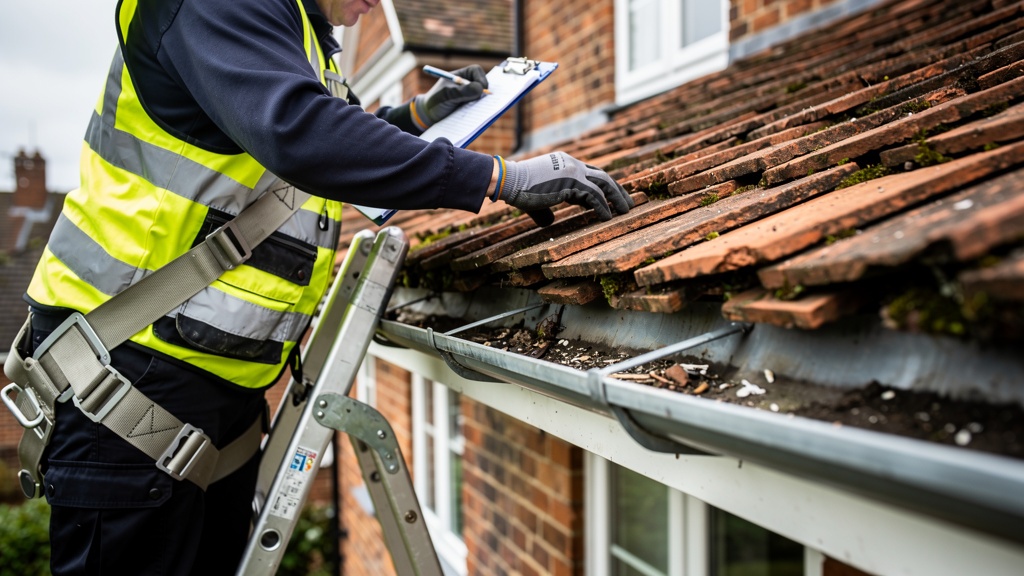
- Roof coverings — condition, age, likely remaining life and any evidence of leaks or ponding
- Services — visible electrical installations, plumbing, heating, ventilation and air conditioning (HVAC) systems
- Internal fit-out — condition of floors, ceilings, partitions, windows and finishes, and suitability for your intended use
- Asbestos risk — visual identification of potential asbestos-containing materials (ACMs) and recommendations for management or specialist survey
- Planning and compliance — any observed issues with building regulations, fire safety or accessibility compliance that we note during the inspection
- Environmental considerations — drainage to watercourses, fuel storage, potential contamination risks observable during inspection
The report categorises defects by urgency and provides cost guidance to help you quantify the building's repair liability. This information is invaluable when negotiating the purchase price or deciding whether to proceed at all.
"I recently surveyed a retail unit in Uckfield for a client who was buying the freehold. The survey identified a significant roof drainage problem causing water accumulation on the flat roof, and evidence of previous — and inadequately repaired — fire damage to the rear. The client renegotiated £25,000 off the purchase price and required the vendor to provide evidence of completed fire damage repairs before exchange. The survey cost £900." — Robert Callahan, Senior Building Surveyor, Crowborough Surveyors
Schedule of Condition Before Taking a Lease
If you're taking on a commercial lease, one of the most important — and most commonly neglected — steps you can take is to commission a schedule of condition before you sign. A schedule of condition is a detailed photographic and written record of the state of the building at the time you take the lease. It is formally attached to the lease and establishes the baseline against which any end-of-lease dilapidations claims will be assessed.
Without a schedule of condition, you could be held responsible for making good pre-existing defects at the end of your tenancy — even if those defects were present before you moved in. A well-prepared schedule of condition, prepared by an independent RICS surveyor, protects you from being unfairly penalised for dilapidations you did not cause.
We strongly advise every commercial tenant to commission a schedule of condition before signing any lease. The cost is modest — typically £500–£1,500 depending on the size and complexity of the premises — and the potential saving at the end of the lease can be many times greater.
Building Condition Surveys for Landlords
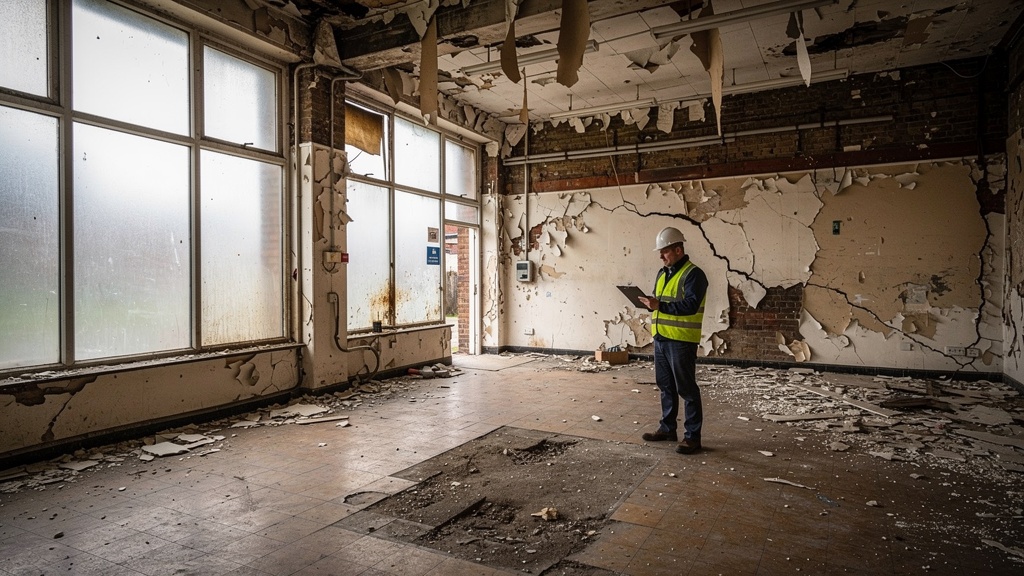
As a commercial landlord in East Sussex or Kent, regular building condition surveys help you understand the state of your asset, plan maintenance expenditure, and manage your tenants' repair obligations effectively. Our services for commercial landlords include:
- Periodic building condition surveys — a systematic assessment of the property's condition, typically carried out every 3–5 years or at key tenancy milestones
- Planned preventative maintenance schedules — identifying maintenance requirements over a 5–10 year horizon and forecasting the associated costs, enabling effective budget planning
- Terminal dilapidations schedules — prepared at lease end, setting out all breaches of the tenant's repairing and decorating obligations and quantifying the remediation cost
- Interim schedules of dilapidations — served during the tenancy where a tenant's failure to maintain the property is causing or threatening to cause significant deterioration
- Scott schedule responses — if you are a tenant who has received a dilapidations schedule, we can prepare a formal Scott schedule response challenging any items that are disputed, excessive or not covered by the lease
Types of Commercial Property We Survey
Our commercial surveyors have experience across the full range of commercial property types found across East Sussex and Kent:
- Retail units — high street shops, shopping centre units, retail parades and convenience stores
- Office buildings — town centre offices, business parks, converted residential and purpose-built office accommodation
- Industrial and warehouse — light industrial units, distribution warehouses, trade counters and manufacturing facilities
- Mixed-use — properties combining retail, office or residential elements, increasingly common in town centre regeneration schemes
- Leisure and hospitality — restaurants, pubs, gyms and hotels
- Agricultural and rural — farm buildings, barns, equestrian centres and rural business premises
- Healthcare and education — medical centres, dental practices, nurseries and private schools
Asbestos in Commercial Buildings
Any commercial building constructed before 2000 may contain asbestos-containing materials (ACMs). Asbestos was widely used in construction materials throughout the 20th century — in floor tiles, ceiling tiles, insulation boards, pipe lagging, artex coatings and more. Under the Control of Asbestos Regulations 2012, duty holders (typically building owners and landlords) are required to manage the risk from asbestos in non-domestic premises.
Our pre-purchase surveys include a visual assessment of the risk of ACMs and recommendations for further specialist investigation where appropriate. Before any refurbishment or demolition works are carried out, a Refurbishment and Demolition (R&D) Asbestos Survey must be commissioned from a UKAS-accredited specialist. We can advise on this and recommend suitable specialists in East Sussex.
What Happens If the Survey Identifies Major Defects?
If our survey reveals significant defects, you have several options depending on the nature of the transaction:
- Renegotiate the purchase price — use the survey findings and cost estimates to negotiate a price reduction that reflects the repair liability
- Require the vendor to carry out remedial works — as a condition of exchange, particularly for urgent defects such as structural instability or active water ingress
- Request retention of funds — an amount held back from the purchase price until specific works are completed to a satisfactory standard
- Walk away — if the defects are so serious or numerous that the property does not represent a viable investment at any price
Our surveyors are experienced in supporting clients through negotiations following a survey and can provide additional cost reports or attend meetings with vendors and their agents as required.
Commercial Survey Costs in East Sussex
Commercial survey fees depend on the size, type, complexity and condition of the property. Unlike residential surveys, commercial survey fees are typically agreed individually based on the specific instruction. We always provide a fixed, all-inclusive fee quote before we start, with no hidden charges.
As a broad guide:
- Small retail unit or office (up to 200 sq m): £750–£1,500
- Medium commercial property (200–500 sq m): £1,500–£3,000
- Large industrial or warehouse (500+ sq m): £3,000–£6,000+
- Schedule of condition (small to medium premises): £500–£1,500
These are indicative ranges only. Contact us to discuss your specific requirements and receive a competitive fixed-fee quotation.